

How to Entertain Indoor Cats: A 2026 Guide
Table of Contents
- Behavioral Signs Your Indoor Cat Is Bored
- Cat Exercise Requirements: How Much Activity Does Your Cat Actually Need?
- Best Interactive Cat Toys for Active Engagement
- Puzzle Feeders for Cats: Turn Mealtime Into Mental Stimulation
- How to Entertain Indoor Cats With Vertical Space and Window Perches
- DIY Cat Entertainment Ideas That Cost Almost Nothing
- How to Entertain Indoor Cats by Age: Kittens, Adults, and Seniors
- Scent Enrichment, Catnip, and Clicker Training
Last Updated: August 21, 2026
Most indoor cats spend their waking hours waiting rather than resting, and that distinction matters. Knowing how to entertain indoor cats effectively is one of the most underrated parts of responsible cat ownership. Below, we'll walk through how to read your cat's boredom signals, build a stimulating environment, and keep enrichment fresh across every life stage.
According to the American Association of Feline Practitioners' feline environmental needs guidelines, indoor cats require deliberate environmental enrichment to maintain physical and psychological health. Without it, behavioral problems follow quickly.
Behavioral Signs Your Indoor Cat Is Bored
Boredom in cats rarely looks like sadness. It looks like destruction, aggression, and compulsive habits that owners often misread as personality quirks.
The most common behavioral signs include excessive grooming leading to bald patches, furniture scratching beyond normal claw maintenance, aggression toward other pets or people with no clear trigger, overeating when food is the only stimulating event, repetitive pacing along the same path, attention-seeking behavior at odd hours (particularly 3-5 AM), and lethargy paired with restlessness.
A common mistake is treating these symptoms individually rather than addressing the root cause: an environment that doesn't meet a cat's cognitive and physical needs. If your cat exhibits two or more of these regularly, enrichment is the fix.
Cat Exercise Requirements: How Much Activity Does Your Cat Actually Need?
Cats are efficient predators who conserve energy between hunts, not low-maintenance pets. Most adult cats benefit from two dedicated interactive play sessions per day, each lasting 10-15 minutes. Kittens need 30-45 minutes spread across multiple short sessions. Senior cats need gentler, shorter sessions but still benefit from daily movement to maintain joint health and cognitive function.
The goal combines predatory instincts, stalking, pouncing, chasing, with a satisfying "catch" at the end. Physical exercise alone doesn't cover it. As the Indoor Pet Initiative from Ohio State University's veterinary school explains, cats need opportunities to express natural behaviors in a cat-friendly environment.
| Life Stage | Daily Play Time | Session Length | Best Activity Type |
|---|---|---|---|
| Kitten (under 1 year) | 30-45 minutes | 5-10 min bursts | Wand toys, chasing, climbing |
| Adult (1-10 years) | 20-30 minutes | 10-15 min sessions | Interactive toys, puzzle feeders |
| Senior (10+ years) | 10-20 minutes | 5-10 min gentle play | Low-impact wand, scent enrichment |
Best Interactive Cat Toys for Active Engagement
The best interactive cat toys work because they mimic the prey experience. A toy that moves unpredictably, makes noise, and can be "caught" satisfies the predatory instinct loop that cats are hardwired to complete.
Wand Toys and Prey Drive Play
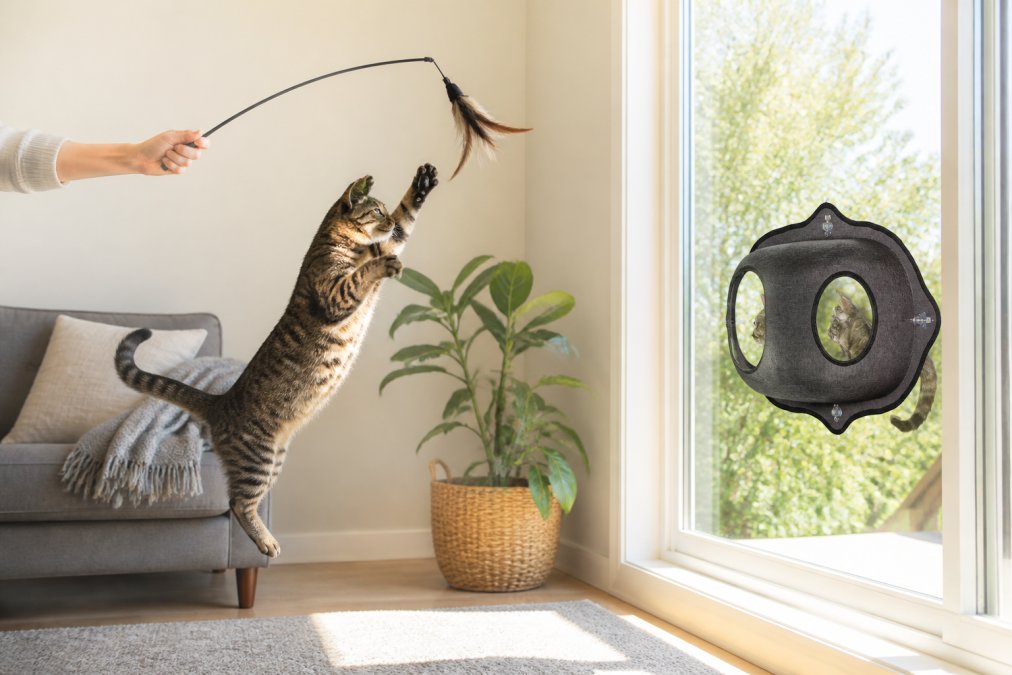
Wand toys are the single most effective interactive cat toy because you control the movement. A wand with feathers, ribbons, or a small plush attachment can mimic a bird, mouse, or insect in ways electronic toys rarely replicate.
Vary the movement pattern: drag the toy slowly across the floor, let it go still, twitch it behind a cushion, lift it suddenly. This mirrors real prey behavior and keeps your cat engaged. Always end a session by letting your cat catch and "kill" the toy; stopping mid-chase leaves the predatory loop incomplete and causes frustration.
Solo Play Toys and Rotating Your Toy Selection
Solo play toys fill gaps when you're not home. Battery-operated wands, motorized mice, and crinkle balls serve a purpose only if you rotate them. A toy on the floor for a week is furniture; reintroduced after two weeks in a drawer, it's suddenly interesting again. Keep a "toy library" of eight to ten items and rotate every five to seven days.
For cats needing more challenge, puzzle toys that dispense treats when batted correctly provide excellent solo engagement. The Prevue Pet Products Bounce 'n Spring Cat Scratcher from Elevate Pet Supply combines a jute scratching post with four spring arms and plush toy attachments, giving cats a multi-function solo play station.

Puzzle Feeders for Cats: Turn Mealtime Into Mental Stimulation
Mealtime is the most underused enrichment opportunity. When a cat walks to a bowl and eats in 90 seconds, that's a missed chance for 15 minutes of cognitive engagement.
Puzzle feeders for cats require manipulation, pawing, or investigation to access meals. They tap directly into foraging behavior, the same instinct that drives hunting. Even cats with low prey drive engage with food puzzles because the reward is immediate and consistent.
Start with a simple flat puzzle requiring pawing from shallow compartments. Once your cat solves it reliably, move to a three-dimensional puzzle with multiple access points. Use puzzle feeders for at least one meal per day, start easier than necessary to avoid frustration, and wash them after every use to prevent bacterial buildup. For cats on wet food, use lick mats as an equivalent foraging tool.
Foraging behavior also slows eating, benefiting cats prone to vomiting after meals.
How to Entertain Indoor Cats With Vertical Space and Window Perches
Vertical territory is not a luxury for indoor cats; it's a fundamental environmental need. Cats feel safest surveying their environment from above, and a flat space with no elevation options is genuinely stressful.
Cat Trees and Climbing Structures
A good cat tree solves three problems simultaneously: it provides vertical space, a designated scratching surface, and a safe resting spot. Height matters; a tree reaching close to ceiling level gives your cat a genuinely elevated vantage point.
Prioritize stability over aesthetics. A wobbly cat tree that tips when your cat jumps will be abandoned immediately and can cause injury. The Curious Cat Cube Condo from Elevate Pet Supply was designed based on research into cat behavior, specifically the preference for elevated resting spots and built-in play options. Place cat trees near windows wherever possible; the combination of height and outdoor view is the most effective passive enrichment setup.

Bird-Watching Stations and Window Bubble Pods
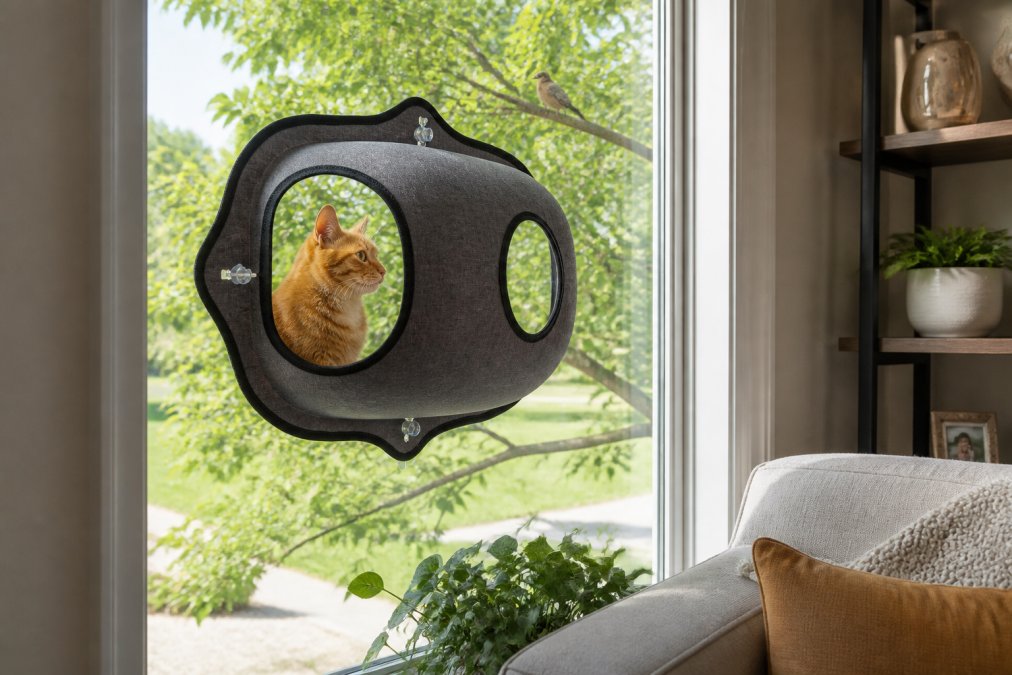
A window with bird activity outside is essentially free television for your cat. Setting up a bird-watching station, a feeder placed where your cat can see it from a window perch, turns passive time into active mental stimulation. Cats will watch, track, and stalk birds through the glass for extended periods.
The EZ Mount Window Bubble Pod Kitty Sill from Elevate Pet Supply gives cats a 270-degree view of the outdoor environment, including angles inaccessible from a flat windowsill. It mounts directly to the window without floor space, ideal for apartments. At $126.24, it's one of the highest-value single enrichment investments for cats spending significant time alone.
DIY Cat Entertainment Ideas That Cost Almost Nothing
Budget-friendly enrichment is genuinely effective and often more interesting to cats than expensive toys due to higher novelty.
The most reliable options: paper bags and cardboard boxes left open on the floor; toilet paper roll puzzles filled with kibble; crinkle balls made from aluminum foil; sock mice filled with catnip and crinkle material; window bird feeders costing under $10; paper grocery bag tunnels; and rotating household items like furniture placement or new blankets. Cats need novelty and the opportunity to investigate; you don't need expensive equipment to deliver that.
How to Entertain Indoor Cats by Age: Kittens, Adults, and Seniors
Age-specific enrichment is crucial. A senior cat pushed through high-intensity wand play is stressed, not enriched. A kitten given only a slow puzzle feeder is under-stimulated within minutes.
Kittens need high-frequency, short-burst play with toys that move fast and change direction. Introduce puzzle feeders early; kittens who learn foraging behavior young maintain it as adults.
Adult cats benefit most from variety and routine combined. Keep play sessions consistent in timing but vary toys and activities. Puzzle feeders, wand play, clicker training, and vertical space all contribute meaningfully to cognitive health.
Senior cats often show reduced interest in play but still need mental stimulation. Scent enrichment becomes more valuable as mobility decreases. Lower cat trees with ramps help seniors maintain vertical territory access. Shorter, gentler wand sessions with slower prey movements keep the predatory loop active without physical strain. According to the American Veterinary Medical Association's guidelines on senior cat care, maintaining mental engagement in older cats supports overall quality of life and can slow cognitive decline.
Many seniors want to engage but need enrichment adapted to their physical capacity.
Scent Enrichment, Catnip, and Clicker Training
Scent enrichment is the most underused tool in cat care. Cats experience the world primarily through smell, so introducing new scents, dried herbs, or safe botanicals triggers investigative behavior that can occupy a cat for extended periods without physical exertion.
Catnip works for roughly 50-70% of cats due to a genetic trait. The response, rolling, rubbing, vocalizing, represents a safe, temporary euphoric state lasting 10-15 minutes. Cats responding to catnip benefit from it two to three times per week; daily exposure reduces the response through habituation.
The Cat Nip Cyclone from Elevate Pet Supply maximizes catnip engagement by dispersing aroma continuously as the ball rotates, keeping scent active rather than letting it dissipate. It comes with both catnip and a ball included.
Clicker training is the most underrated enrichment tool for indoor cats. Most owners assume cats can't be trained; they can, and the training process itself is enrichment. Clicker training uses positive reinforcement to teach behaviors like sit or high-five. The cognitive work provides mental stimulation equivalent to extended play sessions. Five-minute training sessions two to three times per week show progress.
Keeping an indoor cat genuinely stimulated requires building an environment that meets predatory instincts, cognitive needs, and social drive simultaneously. Elevate Pet Supply offers a curated range of enrichment products, from the EZ Mount Window Bubble Pod Kitty Sill to the Cat Nip Cyclone and the Curious Cat Cube Condo, specifically selected to address those needs at every life stage. Get started with Elevate Pet Supply and give your cat the active, engaged indoor life it's built for.

Frequently Asked Questions
How much playtime does an indoor cat need daily?
Most adult indoor cats benefit from two dedicated play sessions per day, each lasting 10 to 15 minutes. That totals roughly 20 to 30 minutes of active, interactive play. Kittens need more frequent sessions because of their higher energy levels, while senior cats do better with shorter, gentler activity. Consistency matters more than duration. A daily routine that satisfies your cat's predatory instincts through stalking, chasing, and pouncing reduces boredom and supports long-term cognitive health.
What are signs that my indoor cat is bored?
Common signs of boredom in indoor cats include excessive meowing, destructive scratching, overeating, lethargy, and repetitive behaviors like pacing. Some cats will overgroom themselves to the point of hair loss, while others pick fights with other pets or demand constant attention. If your cat seems restless at night or is knocking things off surfaces repeatedly, those are strong signals that the indoor environment lacks enough mental stimulation and physical exercise to satisfy their natural predatory instincts.
How do I make my indoor cat happier?
Rotate toys regularly so familiar items feel new again. Add vertical territory with cat trees or wall-mounted shelves so your cat can climb and survey their space. Set up a window perch near bird activity for passive enrichment. Use puzzle feeders for cats at mealtimes to engage foraging instincts. Schedule daily interactive play with a wand toy. Even simple DIY cat entertainment like a paper bag or a cardboard box adds novelty. Scent enrichment with catnip rounds out a well-balanced routine.
Is it safe to leave interactive toys out for solo play?
Not all toys are safe for unsupervised use. Wand toys with strings, ribbons, or small attachments should be put away after interactive play sessions because cats can ingest loose parts or become tangled. Sturdy solo play toys, like spring-arm scratchers or battery-free rolling balls, are generally safer to leave out. Always inspect toys for wear before leaving them with your cat. Rotating safe solo toys in and out keeps the indoor environment stimulating without creating unnecessary safety risks.
This article was written using GrandRanker